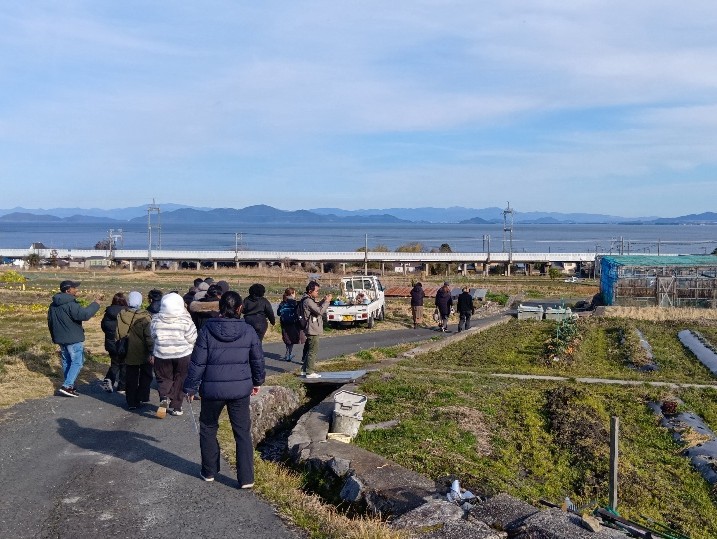
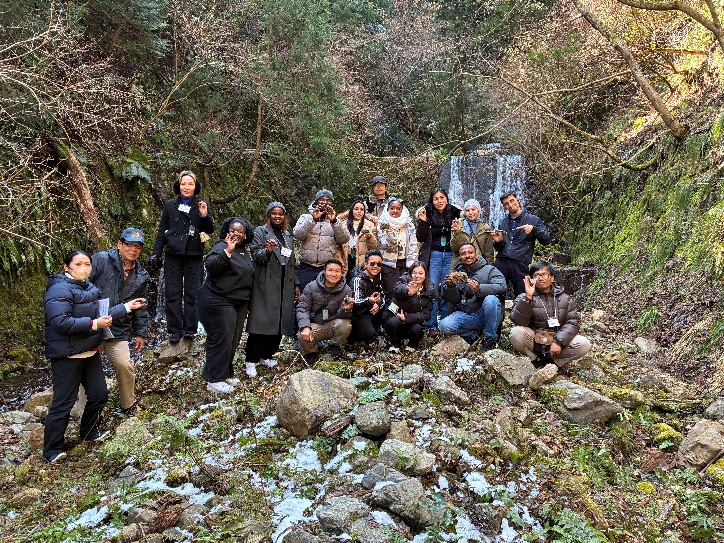
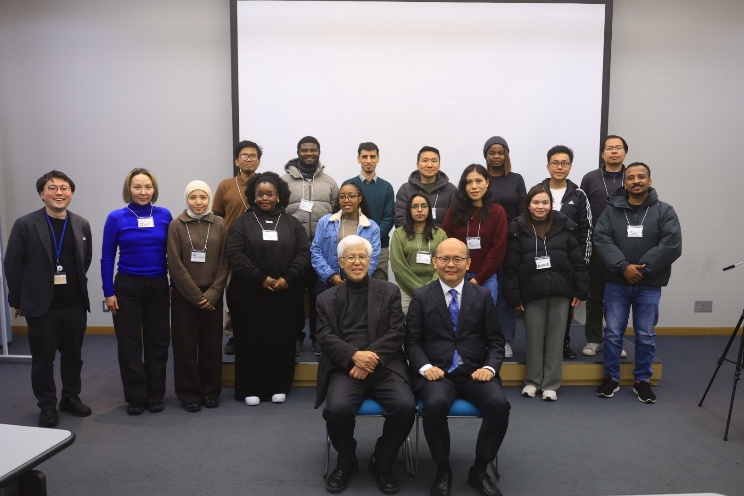
From March 10 to 11, 2026, ILEC cooperated in delivering lectures and organizing a field trip for the FY2025 Regional Understanding Program on lessons from development and conservation around Lake Biwa, hosted by JICA Kansai. This marked the seventh time ILEC has cooperated with this program. A total of 15 participants from 15 countries, all long-term international students studying at Japanese universities, took part in the program.
1. Lecture: “The History of Development of Lake Biwa and Its Importance”
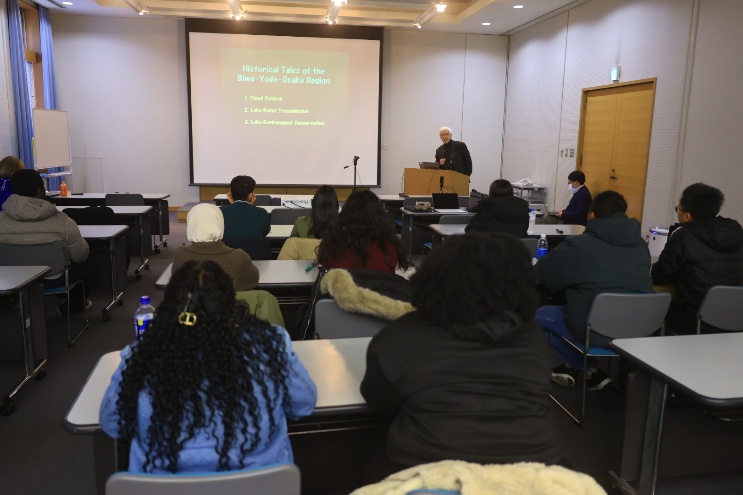
Dr. Nakamura, ILEC Science Advisor, delivered a lecture covering the history of Lake Biwa, its importance as a water source for the Kansai region, pollution during the period of rapid economic growth, the development of the Lake Biwa Canal, and water quality management.
The lecture was also delivered online, attracting an additional 68 viewers beyond the in-person attendees. Many questions were raised by participants, including topics such as the maintenance of aging water infrastructure and sustainable flood control in developing countries, reflecting the high level of interest among the audience.
2. An Eco-Tourism Experience in the Hira Foothills–Moriyama Area: Tracing the Journey of Water
Participation in this tour was proposed by ILEC and incorporated into the field trip. The tour is based on a model tour that won the Grand Prize in the ecotourism contest hosted by ILEC in 2022. It is designed to help participants learn about local water use and management systems by tracing the flow of water from its source to the lake.
During the tour, participants learned about historical flood prevention techniques using stone masonry, local industries utilizing stones generated by past disasters, and community-based water management systems, including hands-on experience operating drainage valves.
In the satoyama (traditional rural landscapes) area, participants observed traditional water use practices such as kawato (traditional water facilities that draw in canal water for daily use) and learned about community rules governing water management. At the lakeshore, participants received explanations about traditional fishing methods, current challenges facing the fishing industry, and initiatives to secure future generations of fishery workers.
Throughout the tour, participants actively engaged with the content, asking questions and deepening their understanding of satoyama life, community-based disaster risk management, and fisheries in the Lake Biwa region. They also experienced aspects of rural life through activities such as shopping at unmanned vegetable stands and harvesting hassaku oranges.