On November 1, the 7th Lake Biwa Family Seminar was held under the theme of “Clean, Learn, and Create.” Twenty-six parents and children took part in the event, where they learned about the environment, cleaned the lakeshore by collecting litter, and created crafts using the litter they had collected.
The World Lake Conference and the UMINOKO Project in Nicaragua
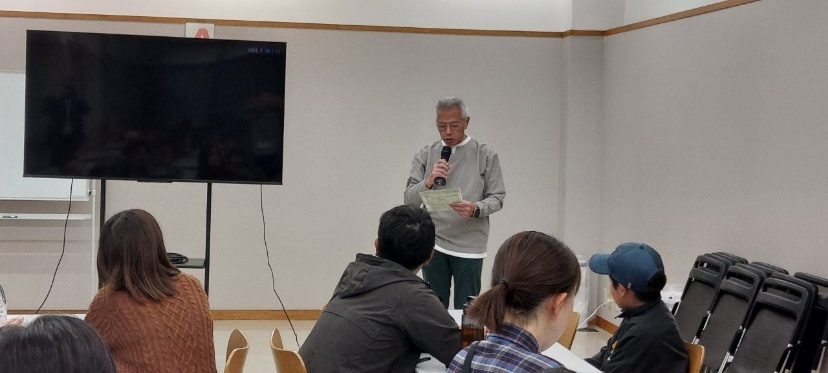
Following opening remarks by Kinki Rokin (Kinki Labour Bank), ILEC introduced the World Lake Conference and the “UMINOKO Project” in Nicaragua. Participants learned that children from Shiga Prefecture had also taken part in the World Lake Conference held in Australia last year. Hearing this, some participants expressed interest in attending next year’s conference in Tanzania. ILEC also introduced its efforts to extend the educational activities of UMINOKO to children in Nicaragua. UMINOKO is an educational vessel on which fifth-grade elementary school students in Shiga Prefecture learn about Lake Biwa. This topic seemed particularly familiar and interesting to the fifth-grade participants.
️What Does Measuring Water Tell Us?
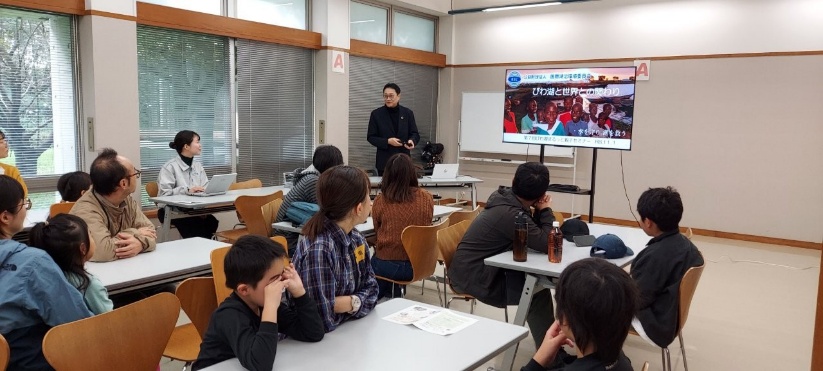
Horiba Advanced Techno, a specialist in water and liquid measurement, gave a presentation on water measurement and analysis.
Through a quiz using photographs of tap water, seawater, muddy water, and other types of water, participants explored which kinds of water could be considered clean.
Although seawater may look clean, it is not suitable for drinking. On the other hand, muddy water, despite its appearance, can contain nutrients that support plants and animals. Tap water, meanwhile, serves an essential purpose in our daily lives, regardless of its nutrient content.
The presentation highlighted that the condition and suitability of water cannot be determined by its appearance or smell alone. Scientific measurement and analysis are essential for understanding the properties of water and determining whether it is suitable for a particular purpose.
Why Do Seabirds Starve Even When Their Stomachs Are Full?
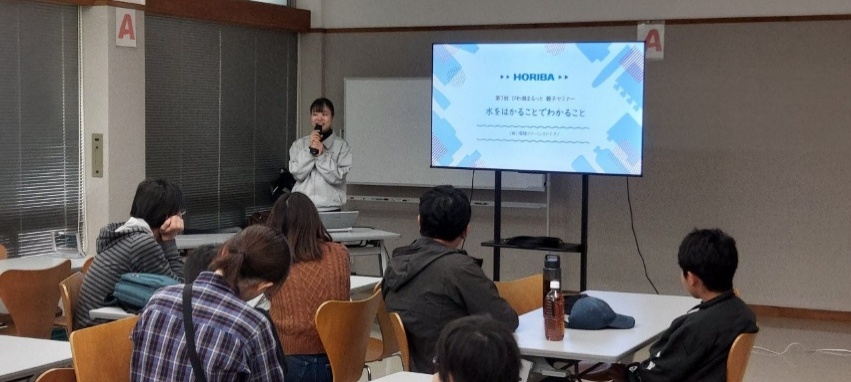
Children from the Meta River Kid Rangers, a group involved in clean-up activities and grass cutting along the Meta River, gave a presentation on the impact of plastic waste on seabirds.
Seabirds sometimes mistake plastic waste for food and swallow it. However, plastic cannot be digested and provides no nutritional value. As plastic accumulates in their stomachs, birds become unable to eat enough of their natural food. As a result, they can suffer from malnutrition and eventually starve to death, even when their stomachs are full.
Cleaning Up the Shore of Lake Biwa
With Biwako Hojo no Sato leading the activity, parents and children headed to the shore of Lake Biwa to collect litter together.
Even on beaches that appeared clean at first glance, they found numerous small pieces of litter, including plastic containers, snack wrappers, straws, and tiny fragments of polystyrene foam.
Participants also learned about plastic-coated fertilizer used in rice paddies. After the nutrients in the fertilizer dissolve, the remaining plastic coating can flow into Lake Biwa through irrigation channels and rivers, posing an environmental concern.
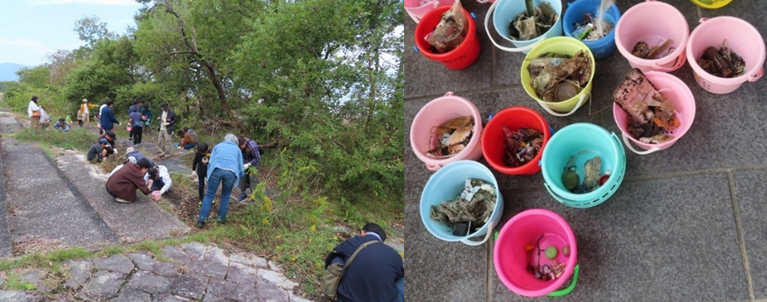
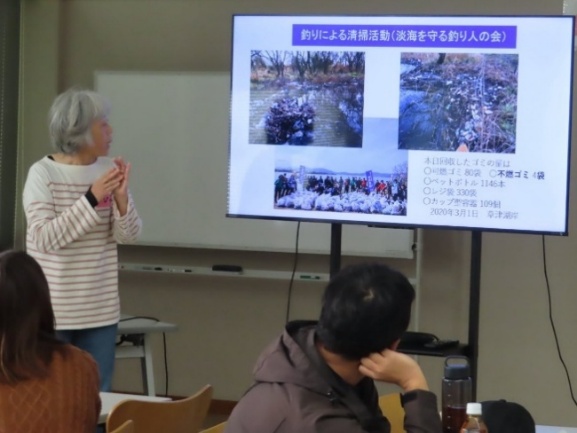
After the clean-up activity, participants learned more about marine litter. It is estimated that approximately 70% of marine litter originates on land, with waste from urban areas and farmland carried through rivers and eventually reaching the sea. This helped participants understand that waste generated in our everyday lives is also connected to the problem of marine pollution.
Craft-making and Searching for Plastic Coatings
For the final activities, participants divided into groups and chose between two hands-on experiences.
The first was craft-making using plastic waste, shells, and other materials collected along the shore of Lake Biwa. Making use of the various colors of the collected materials, participants created keychains in the shape of Lake Biwa.
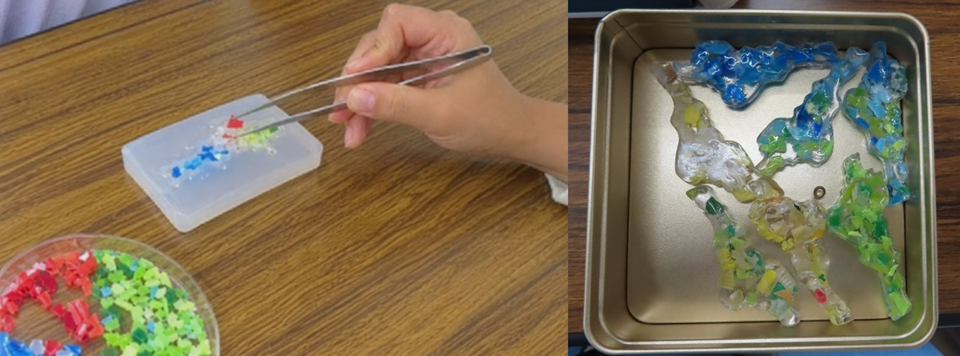
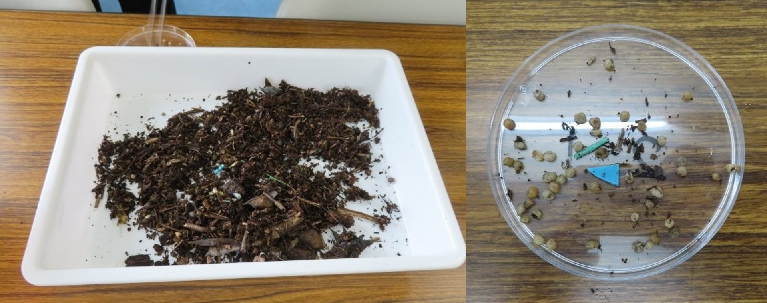
The second activity involved searching for plastic coatings from coated fertilizers in the soil. Participants extracted and sorted the plastic coatings from soil collected along the lakeshore. More plastic coatings were found than expected. Efforts are currently underway to replace plastic coatings with alternative materials, exemplified by corn-based materials. However, farmers face various challenges in balancing environmental considerations with the practical needs of agriculture, including the effectiveness of alternative materials, their effects on crops, and the additional workload involved in farming.